
When global events turn uncertain, it’s natural to feel concerned about what comes next for the markets. Headlines can create a sense of urgency, even panic. But history offers a broader perspective, and one that’s worth paying attention to.

Markets Have Historically Recovered and Grown
Data from NASDAQ Dorsey Wright examining forward S&P 500 returns following major U.S. wartime events reveals an important pattern: markets tend to rise over time after these events.
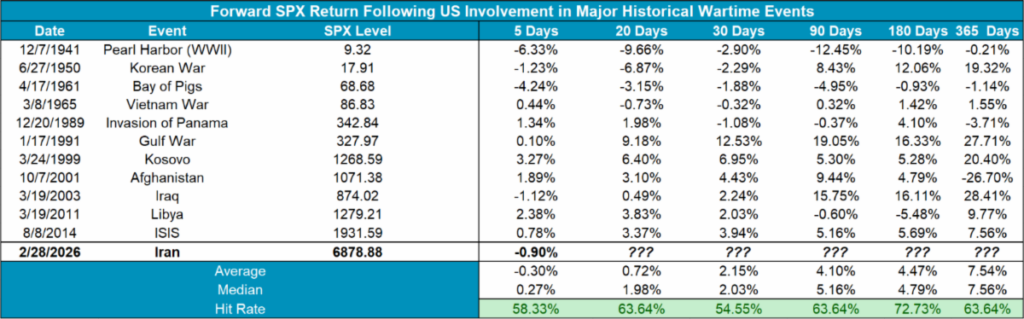
A key concept in this data is the “hit rate,” which refers to how often returns were positive over a given time period. It measures probability, not the size of the return.
For example:
- 5 days after a major military event: markets were positive about 58% of the time
→ essentially a coin toss. - 6 months to 1 year later: markets were much more consistently positive in the aftermath of a major US military operation.
The takeaway is simple: short-term outcomes are uncertain, but long-term trends have historically been resilient and upward.
Volatility Tends to Settle
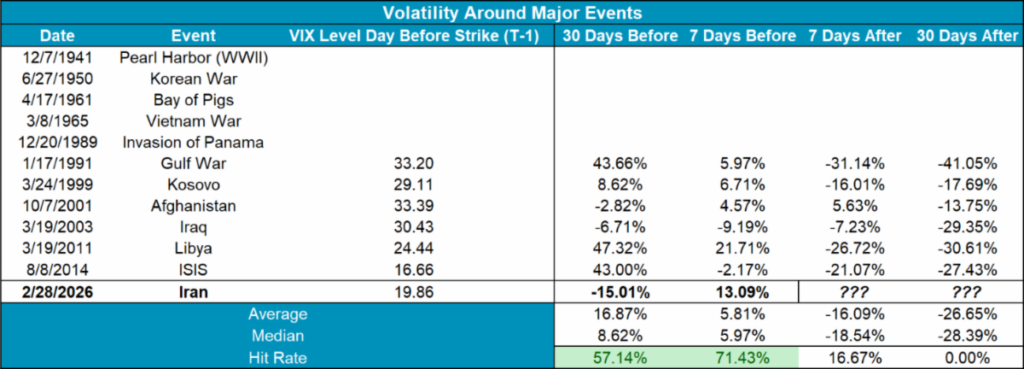
Periods of conflict often bring spikes in market volatility. That’s expected.
However, historical patterns show that:
- Volatility typically declines within weeks following a major event
- By around 30 days, markets tend to stabilize significantly
This reinforces an important principle: initial reactions are often the most turbulent, but they rarely define long-term outcomes.
How Different Assets Respond
Looking across asset classes after major U.S. military actions, the data shows a consistent theme:
- Short-term reactions vary
- Longer-term performance trends positive across major asset categories
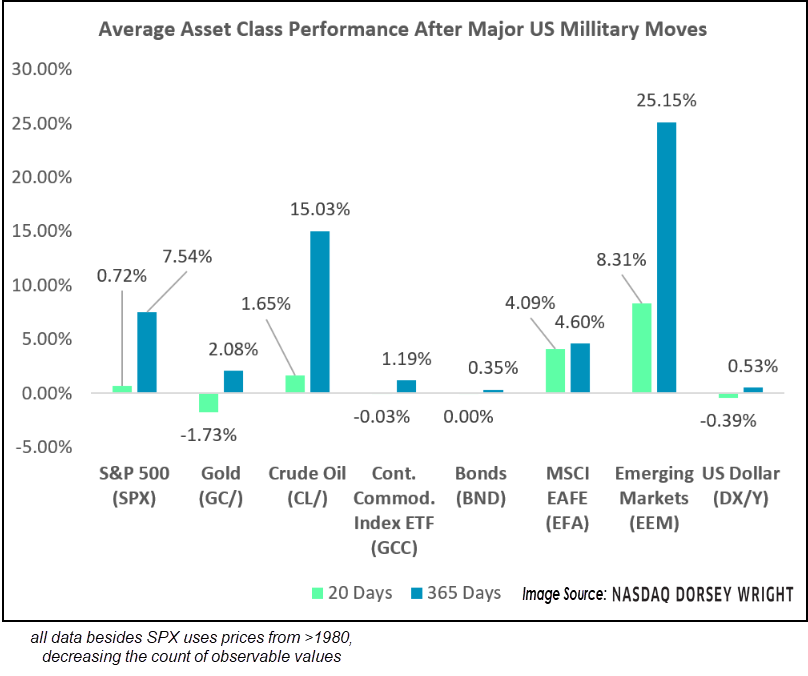
Again, the pattern holds: time in the market matters more than timing the market.
The One-Year Perspective
If we extend the timeline to a full year after major events, the historical evidence becomes even clearer:
Markets have generally moved higher.
That doesn’t mean there’s no risk. But it does suggest that reacting emotionally in the moment can be counterproductive.
Stay Steady in Uncertain Times
It’s human nature to feel the urge to act when uncertainty rises. But investing success is often rooted in discipline, not reaction.
A steady hand on the helm during a storm is what keeps the ship on course.
Let’s Talk About Your Situation
If current events have you thinking about your investments or long-term plan, it’s a good time to have a conversation.
Call 404-245-7900 or email to review your situation and get thoughtful, experienced guidance.
You’re also welcome to share this article with friends or family who may benefit from a clearer perspective.