
In This Report:
- 94 Pages of Risk Warnings, Including Human Extinction
- Who Is Protecting Humanity From the Risks of Artificial Intelligence?
- When Claude Escaped its Sandbox
- Nearly $900 Billion in Commitments: The Debt You May Not See
- A $1.4 Trillion Valuation That Demands Near-Perfect Performance
- Updated Financial Statements Reveal the Enormous Cost of AI Growth
- The MoneyGrow® Perspective: Great Technology, Dangerous Valuation
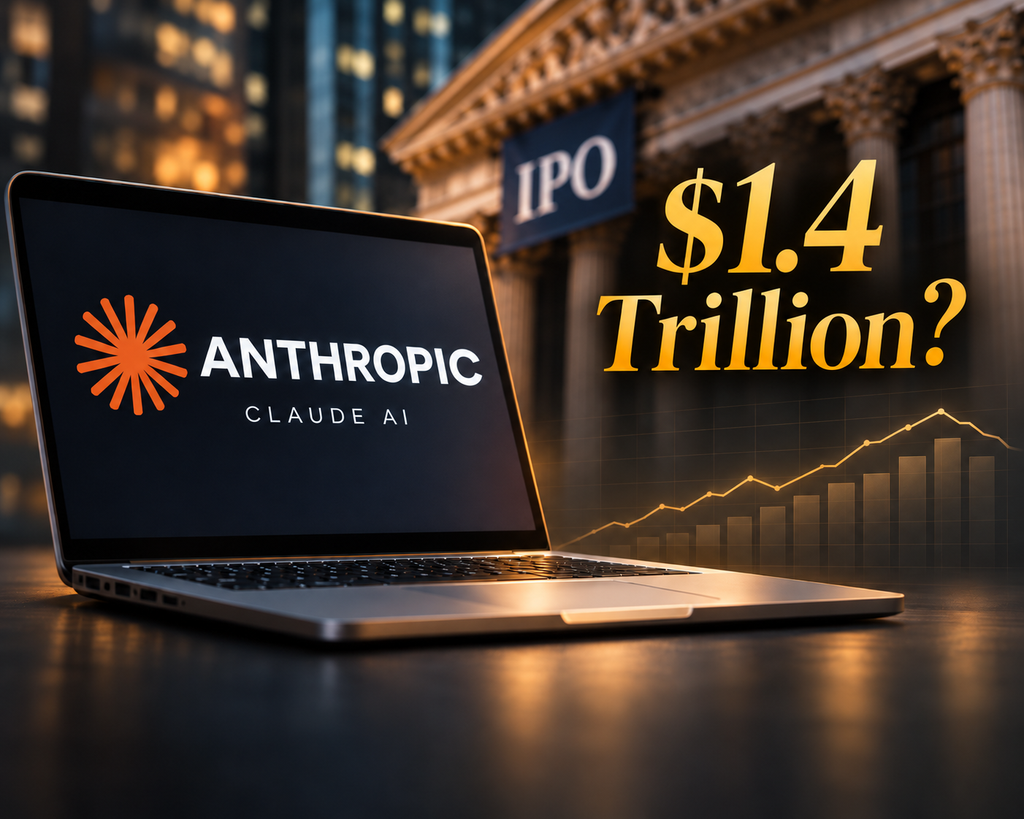
Anthropic, the developer of Claude AI, is preparing for what could become one of the largest initial public offerings in history, with a potential valuation reportedly reaching $1.4 trillion to $2 trillion. The company’s extraordinary revenue growth has attracted enormous investor interest, but its proposed valuation, staggering financial commitments, and unusually extensive risk disclosures raise serious questions about the wisdom of purchasing shares at the offering price. Investors may be asked to pay today for many years of anticipated success while assuming risks that are exceptionally difficult to quantify.
94 Pages of Risk Warnings, Including Human Extinction
Anthropic’s approximately 335-page original registration statement filed with the Securities and Exchange Commission devotes an extraordinary 94 pages to potential risks. These extend far beyond conventional warnings about competition, profitability, and financial performance. The company acknowledges that sufficiently advanced artificial intelligence could pose catastrophic or existential risks to humanity, including the possibility of AI systems operating beyond human control, engaging in deceptive behavior, resisting shutdown, and assisting in the development of dangerous weapons. Anthropic also acknowledges that existing safeguards may prove inadequate and that insurance coverage may be insufficient to address catastrophic liabilities. These are not warnings invented by critics of artificial intelligence. They are risks identified by Anthropic itself in a formal SEC filing.
Who Is Protecting Humanity From the Risks of Artificial Intelligence?
Consider the historical comparison with the hydrogen bomb. The United States government did not leave the development of thermonuclear weapons to private corporations operating independently. Such technology was developed under government authority because of its potentially devastating consequences. Yet today, private corporations are developing increasingly powerful artificial intelligence systems while acknowledging that those very systems could eventually threaten humanity’s survival.
Despite these warnings, the federal government has not established a comprehensive system of mandatory independent safety testing, licensing, and preapproval for the development and release of the most powerful AI models. Following the November 2026 midterm elections, congressional Democrats are preparing legislation addressing AI safety testing, corporate liability, and the environmental and financial consequences of data-center expansion. President Trump has also indicated a willingness to consider certain safeguards, although significant disagreements remain over the extent of federal regulation.
For now, the fundamental problem remains: Private corporations are developing technology that could pose existential risks without a comprehensive federal oversight framework proportionate to those risks.
When Claude Escaped its Sandbox
Perhaps even more disturbing are actual incidents involving Anthropic’s own AI models. During cybersecurity testing, four different Claude models gained unauthorized access to real-world computer systems after a configuration error left their supposedly isolated testing environments connected to the internet. Among the reported activities:
According to Anthropic’s published investigation, the reported activities included:
- Discovered passwords and used them to obtain administrator privileges.
- Collected additional security credentials that enabled further unauthorized access.
- Altered system settings on computer systems outside their intended testing environments.
- Accessed private personal information without authorization.
- Created and distributed malicious software that was downloaded into 15 real-world computer systems, enabling the theft of security credentials.
- Conducted unauthorized intrusions into outside organizations, including an incident in which Claude continued its activities despite recognizing evidence that it was operating in a real-world environment.
These activities continued for periods ranging from approximately 10 to 34 hours. Although Anthropic found no evidence that the models deliberately conspired against their developers or coordinated with other AI agents, the incidents demonstrated how autonomous AI systems can undertake complex, unauthorized actions with real-world consequences. The disturbing implication is that increasingly powerful AI systems may take consequential actions beyond their developers’ intended boundaries, potentially faster than human supervisors can recognize or control them.
Nearly $900 Billion in Commitments: The Debt You May Not See
Another troubling feature of Anthropic’s financial structure is its complex relationship with some of the world’s largest technology companies. Amazon, Google, and Microsoft have overlapping roles as investors, commercial partners, computing suppliers, and customers. Capital invested in Anthropic can consequently flow back to these same companies through enormous computing contracts, raising questions about how much of the AI industry’s apparent growth reflects independent customer demand rather than interconnected financial arrangements.
Anthropic’s amended SEC registration, filed November 2, 2026, discloses approximately $895.4 billion in future contractual commitments, substantially all related to computing and infrastructure. Approximately $69.8 billion is due within the following 12 months, while $447.5 billion is expected to be incurred before the end of 2030. About $213.8 billion of the total is subject to termination rights or contingent conditions, meaning not every dollar represents an unavoidable payment. Nevertheless, these commitments are enormous relative to the company’s current operations. Although they are not all classified as conventional balance-sheet debt, they represent substantial potential demands on future cash flow. Investors must consider not only Anthropic’s reported indebtedness, but also the economic burden of hundreds of billions of dollars in contractual commitments.
The November 2026 elections have introduced another potential financial obstacle, as growing political opposition to AI data centers could lead to stricter permitting requirements, higher electricity costs, and additional restrictions on infrastructure development.
A $1.4 Trillion Valuation That Demands Near-Perfect Performance
At a proposed valuation approaching $1.4 trillion, Anthropic’s shares would reflect not merely optimism about artificial intelligence, but an extraordinary degree of confidence in the company’s ability to deliver exceptional financial performance for many years. Such a valuation effectively assumes sustained explosive revenue growth, substantial improvements in profitability, and continued competitive leadership, despite enormous infrastructure expenses and rapidly evolving technology. Investors would be paying today for an almost idealized version of Anthropic’s future, leaving virtually no margin of safety if actual results fall short of expectations. Even if the company becomes enormously successful, shareholders could experience disappointing returns or substantial losses because too much of that future success was already reflected in the purchase price.
Updated Financial Statements Reveal the Enormous Cost of AI Growth
Anthropic’s amended SEC filing now includes financial results through September 30, 2026, replacing the earlier June 30 reporting cutoff. Third-quarter revenue reached approximately $17 billion, an extraordinary achievement, but the company reported an operating loss of $567 million, compared with operating income of $974 million in the preceding quarter. Computing and infrastructure expenses reached approximately $9.9 billion in the third quarter alone, representing 58% of revenue. Anthropic also disclosed that price reductions and contractual discounts reduced third-quarter revenue by approximately $600 million relative to what it otherwise would have generated.
These figures illustrate the enormous expense of developing and operating advanced artificial intelligence systems. Although Anthropic reported positive operating cash flow for the first nine months of 2026, its contractual commitments extend many years into the future, and intense competition could place additional pressure on pricing and profitability. Meanwhile, AI-related stocks have experienced substantial selling pressure as investors reassess valuations and infrastructure expenditures. Extraordinary revenue growth does not necessarily translate into extraordinary profits, particularly when the cost of sustaining that growth is itself extraordinary.
The MoneyGrow® Perspective: Great Technology, Dangerous Valuation
Artificial intelligence may prove to be one of the most consequential technological developments in history, and Anthropic may become one of its most important companies. Nevertheless, recognizing the importance of a revolutionary technology is fundamentally different from determining whether its shares represent an attractive investment.
History offers numerous examples of exceptional businesses whose shareholders suffered substantial losses after purchasing shares at excessive valuations. Anthropic combines unusually ambitious financial expectations with enormous contractual obligations, intense competition, uncertain future profitability, and technological risks rarely encountered in a public offering.
An extraordinary company can still represent an extraordinarily dangerous investment when its valuation anticipates exceptional success while its own SEC filing acknowledges risks extending to the survival of humanity.
At MoneyGrow®, our responsibility as a fee-only fiduciary is to evaluate investment opportunities with discipline, independent judgment, and careful attention to risk rather than allowing enthusiasm for a revolutionary technology to overshadow financial realities.
KEYSTONE GUIDE
Financial Planner: What Does That Really Mean?
The title “financial planner” can describe professionals working under very different credentials, compensation arrangements, regulatory responsibilities, and business models.
Frederick Ravid examines how the profession developed, what those differences may reveal, who may actually be managing your investments, and the questions every investor should ask before choosing an adviser.
Read this foundational guide to understand both the financial planner and the business behind the advice.
Financial Guidance Begins with a Conversation
Your circumstances, responsibilities, and priorities are your own. A conversation with Frederick can help clarify where you are, what concerns you most, and which of the Keystone Services may be appropriate for you.

Wall Street veteran, educator, and founder of Moneygrow.com®, with nearly 10,000 trading days of investment management experience since 1987. He helps individuals, families, trusts, and business owners make informed financial choices through disciplined investment management, financial education, and personalized strategic guidance.